Written by 4/C Jillian Mara
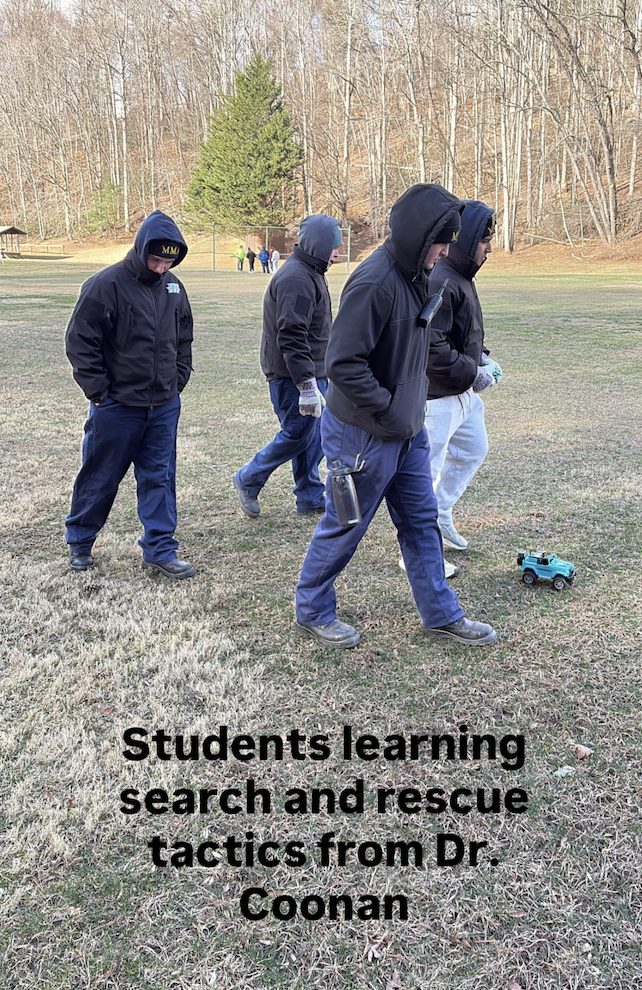
Today we started off with a meeting discussing the terms that were used at the Swananowa committee meeting last night such as Long Term Recovery Groups (LTRG) and National Voluntary Organizations Active In Disaster (NVOAID) and how they impact the community. At 0900 a Search and Rescue (SAR) meeting was run by Dr.Coonan explaining the different search patterns and the radio communication language. We discussed SAR terms that are used to get information out quick and brief. The international distress frequency is channel 16 and is used by any maritime vessel that is in urgent need of assistance. SAR is intentionally open for collaborations from multiple organizations and groups. One policy that is important is Title 14, that permits the US Coastguard to go inland to perform SAR. We looked over radio limitations and what factors that play into them such as antenna size, size of radio, and the range of connectability. We also learned that swath and sweeping is the area that you are searching when completing search patterns that can increase the probability of detection. Another thing we learned is that AIS is a GPS tracking system that tracks how many people are on a vessel. These methods are important to pass on information that can determine the potential location of a victim or a general area of an accident. Next, we split up into groups of four small boats, helicopter (helio), command, and ambulance to simulate the different groups that come together to find people over a large area. I was in charge of helio communications and gathered and reported information in the air. This exercise helped us work together and communicate using the proper language and SAR protocols. After the exercise concluded, we had a hot wash discussion looking at the pros and cons of the SAR mission.
Once completed we headed into downtown Asheville and looked at what areas are still . recovering. This included a pvc pipe factory and brand new, two story housing that is being built alongside the river, where there was substantial flooding. Next, the group had time to walk freely and explore the culture and shops. Afterwards, we headed back to the camp and had dinner.
Lastly Dr. Cheek and Dr. Montano had a reflection meeting of the day where they talked about the gender roles in the community and how most of the leaders in the informal groups are women. They also mention the Herra’s Cherokee nation Asheville auditorium and how North Carolina was Cherokee nation land and how they still have a presence in Asheville. Dr.Montano went over Long Term Recovery Groups (LTRG), Housing Urban Development (HUD), and Community Development Block Grant (CBDG) and what they do in a community. She then discussed The Hazard Mitigation Grant Program (HUDP) which is run by FEMA and is used to provide buyouts due to the recent developments where some applications have been given financial backing.
Today was very interesting and I learned a lot about the different types of SAR patterns and elements that go into a search. I struggled with communicating on the radio without messing up the words and getting my message out. I thought we worked really well as a group to get the victims to and from the water to the hospital. Aside from SAR, I was surprised with the buyout program that just got approval for some houses in the area. I was also wondering how childcare was impacted in the community because I heard residents talking about representations for childcare. Overall I loved the exercise that was conducted today and I loved being able to walk around the community and ask residents their experience and connect to them on a different level.


