
My name is Evan Pierce. I am a junior at Mass Maritime
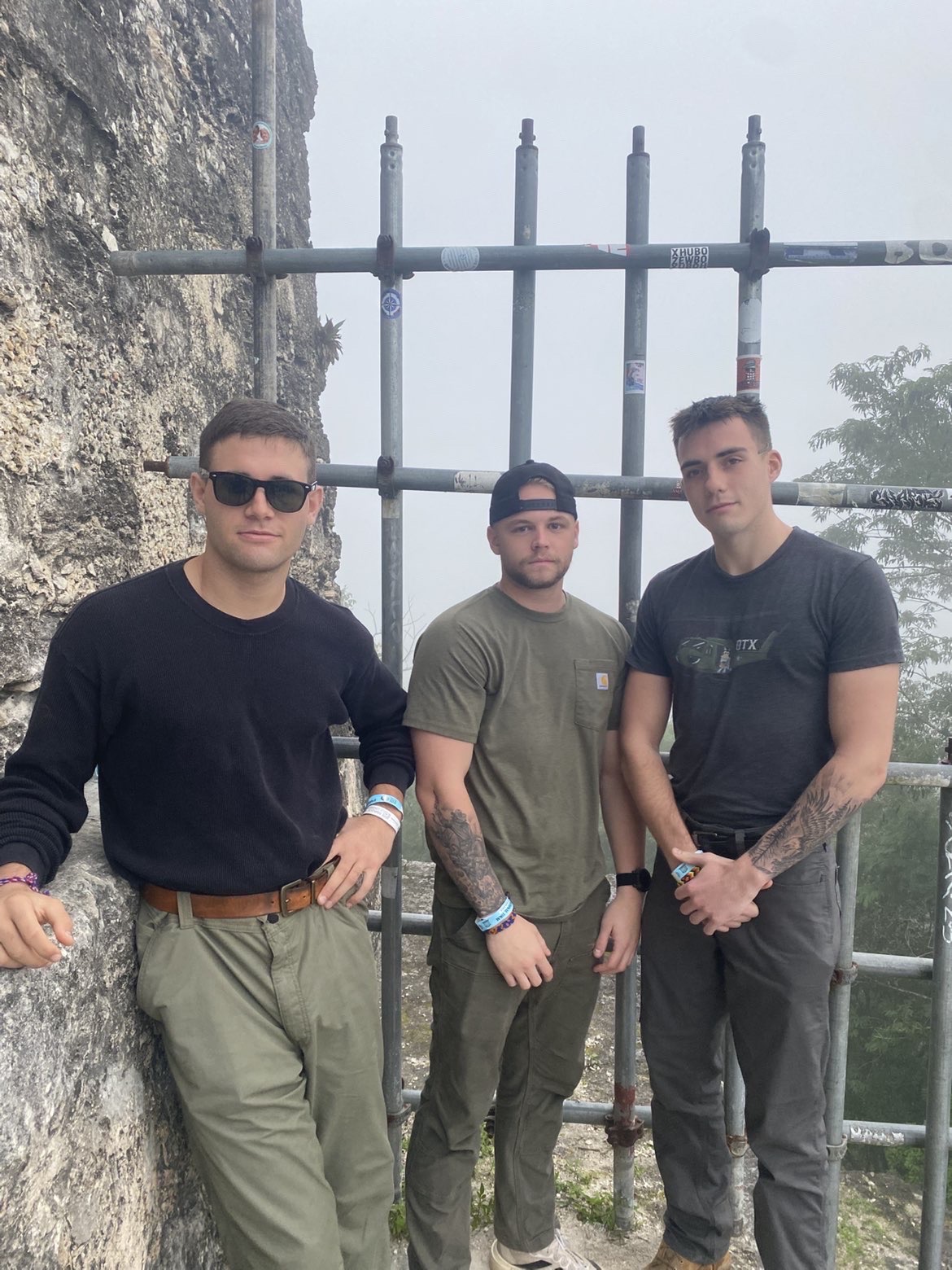
Tikal is the historical hub of Mayan civilization and was a site to behold. In total we spent nearly 8 hours walking through the park, which contains Mayan ruins and pyramids dating from 500 BC to 900 AD. We did this on two separate trips to the site – the first for sunrise and the second for a guided historical tour.
I usually despise waking up before 0900, however the 0430 sunrise hike was a fantastic way to begin the day. The view from the top of Temple IV was a reflective, and reverent experience. Temple IV is the tallest temple in Tikal and was built as a gift for King Yax King Choc’s wife. I can see why people say chivalry is dead. Most of the morning was filled with sounds from the howler monkeys that inhabit the park, and noises from the jungle, rather than chatter with peers. Despite being filled with life and noise, the jungle possessed a feeling of stillness that felt extremely uncommon. There were no signs, advertisements, or reminders of what we have become in our modern world. To me that felt magical.
Our second walk through Tikal began around 1100 and was a historical lesson led by our tour guide Ezekiel (he is known locally as Chequiel). Ezekiel is 33, and has five daughters. He grew up in a small town adjacent to Tikal known as Peten where he has lived his entire life. He has been a guide in Tikal for three years. Ezekiel is passionate about Mayan history, and he loves his job because “he doesn’t just teach his culture, he gets to learn about ours.” One thing we shared in common was our upbringing. He told me the town he has lived in his entire life is “extremely safe, and that everyone knows everyone.” A deep smile and sense of pride wore over Ezekiel’s face when he told me this, which reminded me of my home, Ladera Ranch. Ladera is an idyllic suburb in Southern California where we carry intense pride and passion in our community. Despite being thousands of miles from home and speaking a different language, I understood the way Ezekiel felt.
As for the history of Tikal and the Mayans, we also share many similarities. They worshiped their God, played games, endured conflict, prospered, and struggled. They were human. The city of Tikal was home to royals, religious officials, scientists, politicians, and city administrators. Similarly to American cities, most people lived outside the city in villages (our suburbs). All of the pyramids we saw were religious temples – the people of Tikal were monotheistic, however they also prayed to deities for sun, rain, and protection. Ezekiel said the deities were comparable to Catholic saints.
My favorite site was the Central Acropolis, the place where the royals and city administrators lived. Everything was so calculated and deliberate. The buildings were placed in positions to create wind tunnels for a cool breeze, and the layout was built to display a clear power structure. The palace had built-in rooms for cooking and gathering. I could really feel the life in the place, captivating my imagination. I wondered, how could such a large and powerful city seemingly disappear? Where did the people go? How could this happen? – Ezekiel would be there to answer.
Tikal’s collapse felt rare in the ancient world. The story really shocked me. The city failed because of an ecological disaster. Ezekiel said the city had no natural reservoirs or bodies of water, instead the area around Tikal was chosen because of its direct proximity to vast limestone quarries and natural resources. To compensate for the lack of water, the Mayans developed aqueducts, and manmade places to store water, which were highly advanced. However, as the city expanded over multiple centuries, extremely large portions of the jungle were deforested. The deforestation eventually led to multiple periods where crops failed, and the lack of rain and the ability to sustain water sources in the area caused people to eventually abandon the city around 900 AD. The Mayan kings who had once relied on astrological science and historical knowledge of agriculture cycles failed to fully understand the consequences of centuries of deforestation and building the city so far away from renewable water sources. The jungle and mother nature reclaimed their land, and Tikal disappeared for hundreds of years under the thick Guatemalan jungle. It was a reminder of how careless and reckless mankind often is. Even in the face of an ongoing climate crisis we tend to act with very little foresight.
After walking through Tikal’s historical sites, and climbing up and through multiple temples and pyramids we left the city around 1430, and returned to the hostel. Everyone was wiped out; my Oura ring said we walked over 18k steps, which is about 8.5 miles.
So far, Guatemala has been a beautiful and safe country. It has warm sunlight and strong coffee; the two things that bring me the most joy in life. The group is also really starting to come together. Most conversations are filled with smiles and laughter, even after three very long days, spirits and morale are extremely high. I’m really enjoying learning more about my peers. I really feel so blessed to be surrounded by such high caliber people. Lastly, I’d like to strongly encourage you all to dive into Mayan history. I learned so much today, I truly believe we take their achievements and story for granted.