
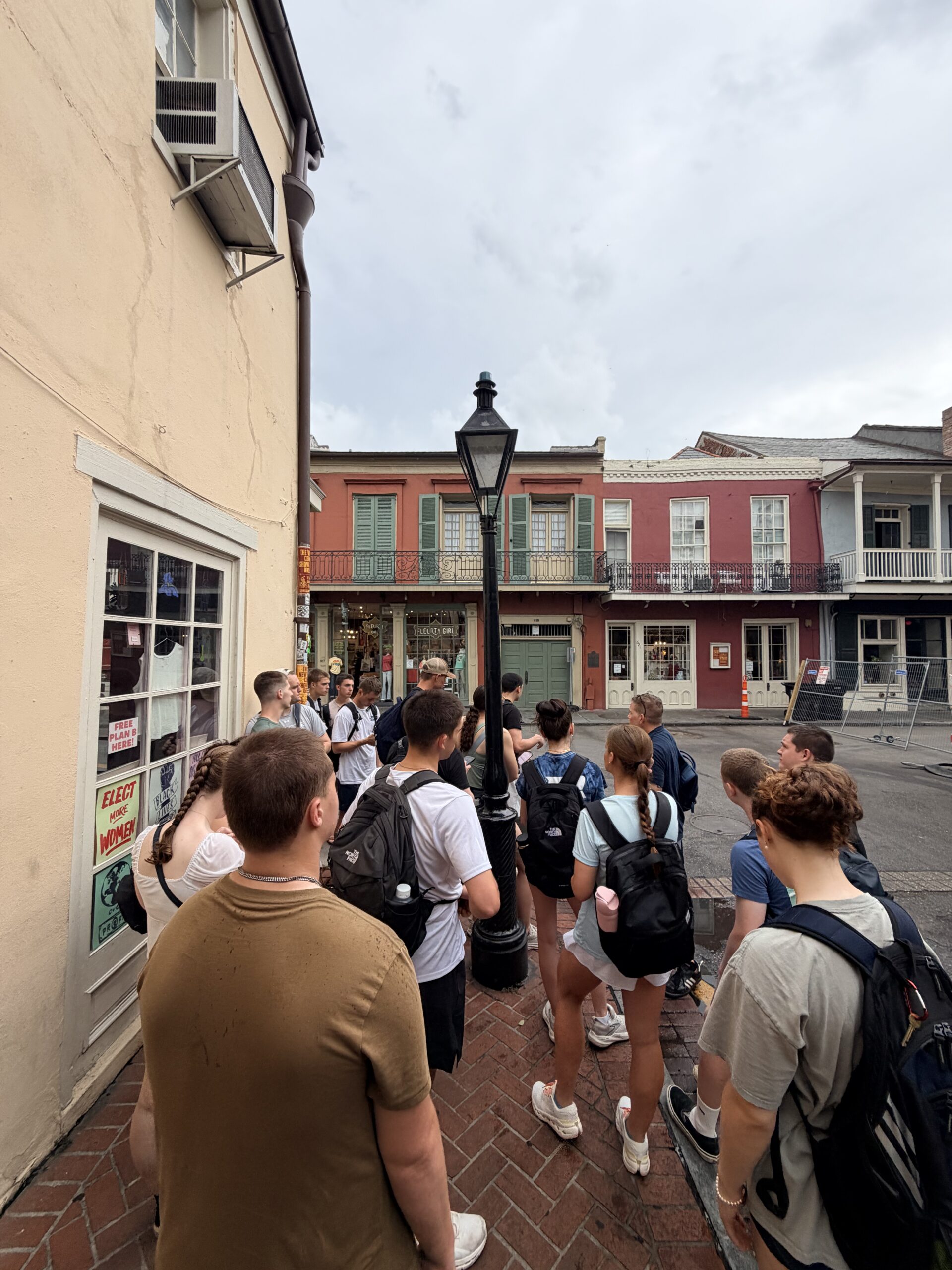
Our second day in New Orleans was all about learning the geography, history, and disaster history of the city.
Indigenous populations found the area that became New Orleans to be ideal for trading as Bayou St. John could be used to cross between the Mississippi River and Lake Pontchartrain. The first Europeans arrived in 1519, but it was not until La Salle sailed the Mississippi River that the French laid claim to the land. Various people made their way to New Orleans – the French, Spanish, Germans, and Swiss thought there was money to be made. Slavery comes to the city as people are taken to New Orleans from Gambia and Senegal. Acadians from Nova Scotia (who became known as Cajuns) arrive following the French and Indian War. Canary Islanders settled St. Bernard and Haitians arrive after the revolution. France and Spain passed the city back and forth until the Louisiana Purchase in 1803 and New Orleans begins to Americanize as it becomes one of the wealthiest and most powerful cities in the world. From the people to the food and the architecture, this history shapes everything about modern day New Orleans.
We took the St. Charles streetcar down to the French Quarter where we stopped at the sites of important disasters from throughout the city’s history. First was Bourbon Street where we discussed the New Years 2025 Bourbon Street terrorist attack. Students were able to see the vulnerabilities of the street and the new barriers the city has installed. Next we stopped at the site of the Upstairs Lounge Arson Attack. In 1973 a popular New Orleans gay bar was set on fire killing 32 people. It is the deadliest fire in New Orleans history and was the deadliest attack on the LGBT+ community until the Pulse Nightclub Shooting. We happened to run into the owner of the building, and he showed the students some of the char marks from the fire that are still visible in the inside stairwell. A few blocks down we stopped to discuss the New Orleans fires of 1788 and 1794 which burned substantial portions of the city and led to charges in building codes that we still benefit from today.
We ended the tour at Café du Monde where the students got to try beignets and then have some free time to explore the Quarter before taking the streetcar back uptown.

