
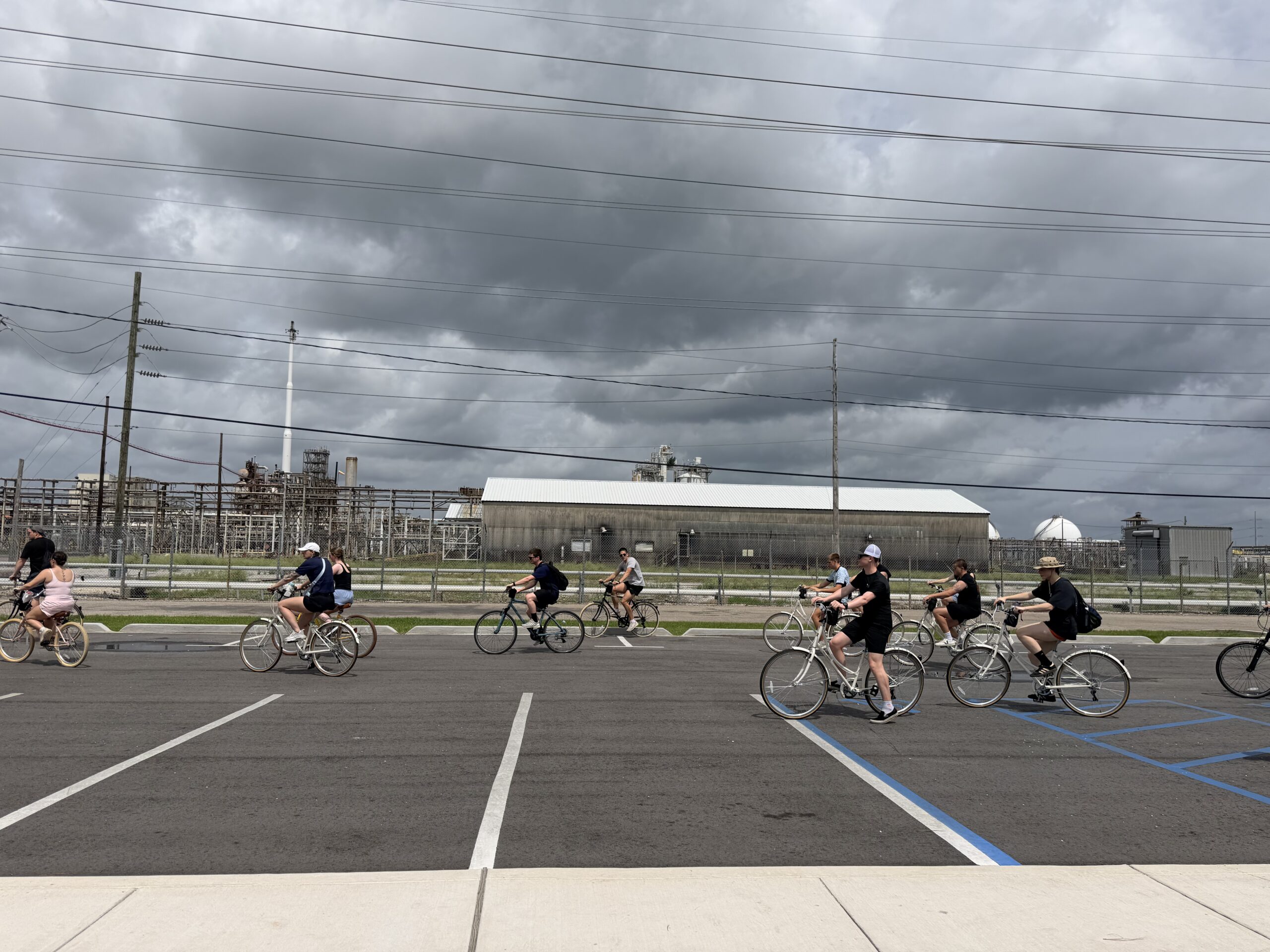
Today we met up with one of our favorite nonprofits in the city – the Louisiana Bucket Brigade!
We headed back out of the city to Norco, Louisiana which is located in Cancer Alley. Cancer Alley is the 85 miles stretch of land along the Mississippi River between Baton Rouge and New Orleans where there are over 200 petrochemical plants and oil refineries. These plants have polluted the air, water, and soil to the point that residents experience increased rates of cancer and other illnesses. Cancer Alley is a textbook case of environmental racism. The impact of the petrochemical industry disproportionately affects communities of color in Louisiana. Environmental racism/justice are critical concepts in emergency management and one the students learn about in their classes. Seeing how this manifests in person is a moving experience.
The Louisiana Bucket Brigade took students on a bike tour of one of these towns. Students got to see just how close people live to these dangerous plants, including a playground which is right up along the fenceline. We heard about several plant-related accidents that inspired the community to fight back and hold these companies accountable for their impact on the health and safety of local residents. This has led to an extensive effort by local residents to correct this injustice including taking their case to the United Nations as a human rights violation.
In addition to this more recent history, students also learned about the 1811 German Coast Uprising, the largest revolt of enslaved people in U.S. history which took place nearby. Students were challenged to consider how the legacy of slave plantations on the same land now being poisoned by petrochemical companies are interconnected.
The students also learned about the Bonnet Carré Spillway which is one of the critical components of the flood infrastructure system in New Orleans. When the Mississippi River gets too high, the Corps of Engineers can open the spillway and redirect the water out into Lake Pontchartrain. It used to be a rare occurrence for the spillway to be opened but in recent years, given increased rainfall and changing spring melt timing due to climate change, it has been used more frequently.
Back on campus in the afternoon Charles Bourg, a local therapist who works with people experiencing homelessness and others who are particularly vulnerable to disasters, came to speak with the students. He taught them about trauma and strategies that can be used to help manage stress, anxiety, and other issues frequently associated with disasters. He spoke with them about the importance of being aware of the mental health of the populations they will be working with in disasters, but also how they themselves may be affected by trauma, secondary trauma, burnout, and similar issues. The field of emergency management has gotten much better in recent years at acknowledging the importance of mental health.

